About Evan Kotronis
Award-winning mentorInternational Science and Engineering Fair
Physics, written the way it is marked
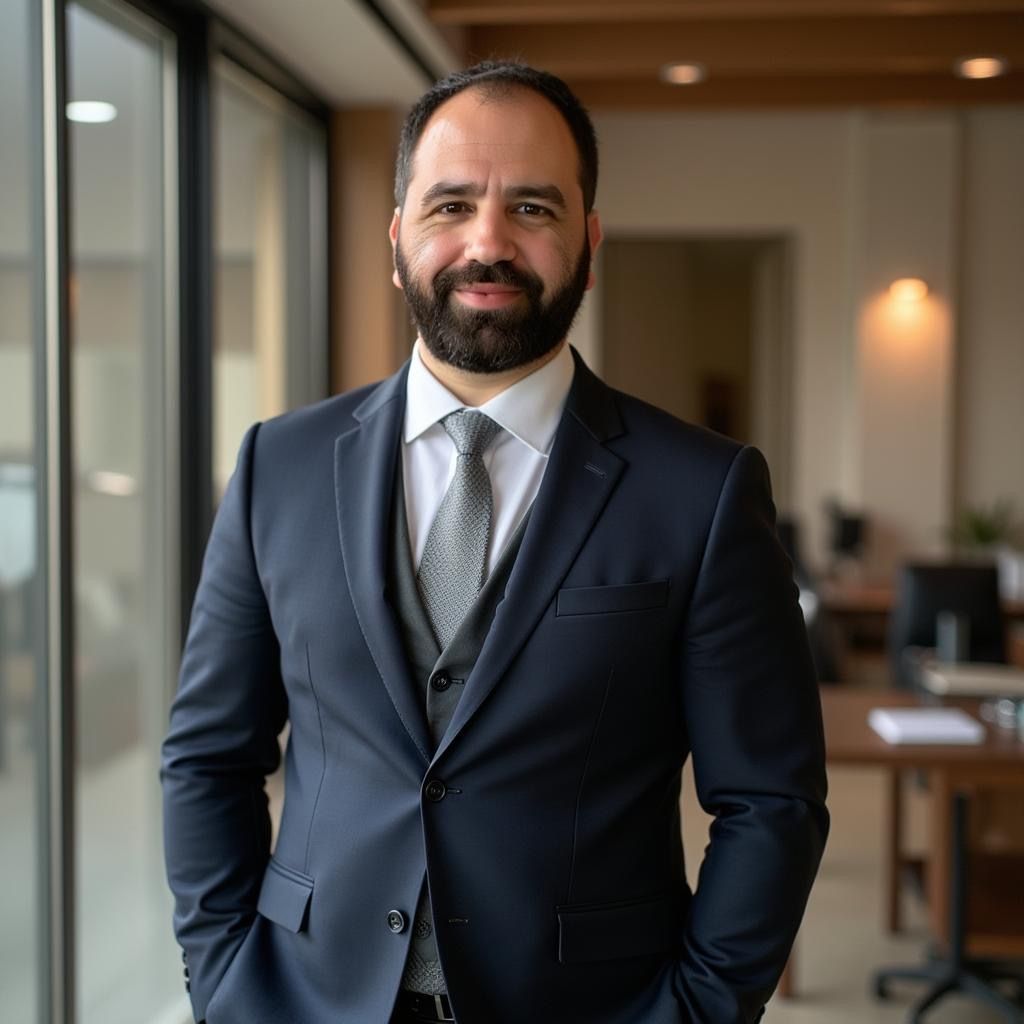
I am Evan Kotronis. For twenty years I have taught Physics and Mathematics — seventeen of them preparing students for the IB, at both Diploma and Middle Years level. Good teaching covers two things: the subject, and how answers to it are rewarded. Correct physics is only half the job; the other half is writing it so the marks can land.
What twenty years teaches you
My path has run through some demanding classrooms in international education — Athens College and Tashkent International School — and, more recently, reviewing examinations for Qatar Foundation Schools as a senior exams reviewer. Along the way I led the science laboratories at Athens College, wrote physics texts still used by students today, produced the national video lessons commissioned by Greece's Ministry of Education, and supervised student research teams to awards at the International Science and Engineering Fair.
The through-line is simple. I have taught a great many able students — and I have learned precisely where the able ones come unstuck: rarely on the physics, usually on how it is written down.
What the mark scheme rewards
Marks are rarely lost on understanding; they are lost on communication. In my own classroom I see it constantly: a student gives an answer that is correct in every physical sense, yet the working does not show what a mark scheme requires it to show, and part of the credit is gone. Another defines a term loosely and forfeits a mark that was never about difficulty. These are not gaps in ability. They are the gap between knowing physics and presenting it the way a mark scheme is written to reward.
I teach to close that gap — not with tricks, but with structure. My students learn to read a question the way the person marking it will; to set out reasoning so that every available mark has somewhere to land; and to recognise the difference between an answer that is right and an answer that scores. Most years, that is the difference between a 6 and a 7.
How I work
I work privately, with a deliberately small number of students, so that each one has my full attention. Lessons are live and one to one, over Microsoft Teams or Google Meet, scheduled around your child's time zone rather than mine — I currently teach students from Dubai to Sydney. My own subjects are IB Physics and Mathematics AA and AI, which I have taught throughout my career, at Diploma and MYP level, alongside IGCSE.
Every student begins with a consultation. It costs nothing and commits you to nothing; it exists so that I can understand where your child stands, and be honest about whether I am the right person to help.
In brief
- Senior exams reviewer, Qatar Foundation Schools
- IB Physics teacher: Diploma Programme at Tashkent International School, MYP at Athens College
- Former Head of Science Labs, Athens College
- BSc Physics; MSc Physics Education; MSc Management, University of Illinois Urbana-Champaign
- Supervised a student engineering project (3D-printed photovoltaic trees) that won three special awards at ISEF 2021, including the Ricoh Sustainable Development Award
- Qualified Teacher Status (QTS), UK Department for Education
- Published physics author (Enastron)
- Physics video lessons for Greece's Ministry of Education
- Four ISEF awards as research supervisor
If that approach fits what your child needs
The next step is a short, free consultation — no obligation.
Contact or message me on WhatsApp